“Echoes of my Mind” Opening Reception

Siena’s various departments consistently invite engaging and entertaining guests to campus. Between performances, discussions, workshops, etc., special visitors are always appreciated in sharing new experiences and knowledge with the campus community. However, when an event is solely based on the creative accomplishments of someone from our campus, there is a communal sense of pride that comes along with the entertainment. This past Wednesday, Sergio Sericolo of Siena’s Marketing and Communications Office, showcased his artistic abilities and was met with the amazement of faculty and students alike.

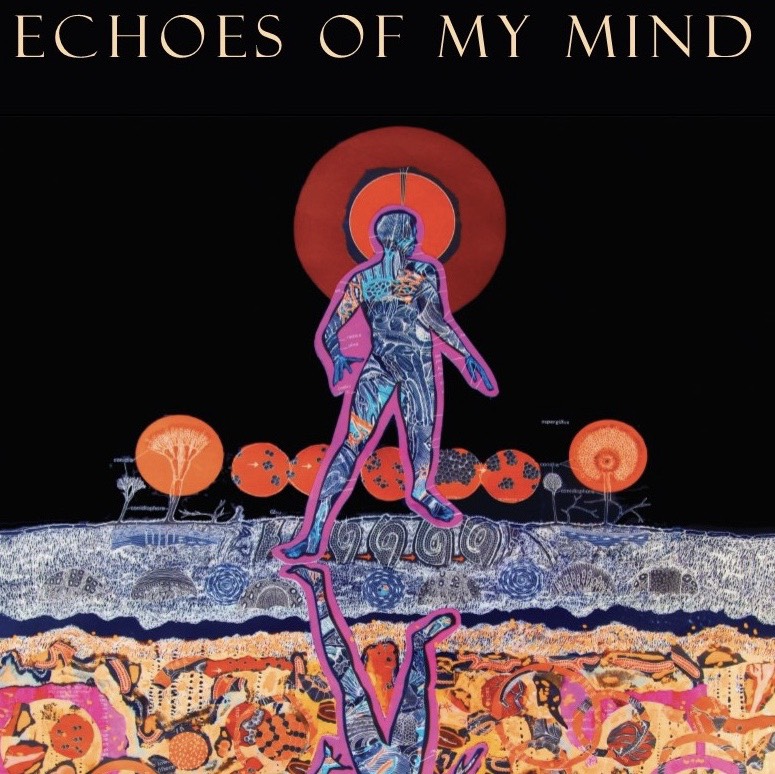
The “Echoes of My Mind” art exhibition’s opening ceremony encouraged guests to enjoy mixed media artworks and to meet the artist, Sergio Sericolo, himself. Outside of being an art director for Siena’s Marketing and Communications Office and an adjunct drawing and painting instructor on campus, Sericolo is also an experienced exhibiting artist. With all of his Siena involvement in mind, it only seems fitting for his work to be shared right here on campus. In Yates Gallery, located on the second floor of the Standish Library, attendees were invited to refreshments as they enjoyed the afternoon. Sericolo was present during the event and freely engaged with guests as they moved from throughout the exhibition. 

“In my work, I incorporate pictures taken from anatomy, biology, and other natural history texts and books” Sericolo included in his displayed artist statement. He focused on layering his work to give more texture and depth to the pieces. He went on to explain that he “begin(s) each work with no plan, no preconceived notion of how the final product might look.” With themes in mind but no set plan for how his art might turn out, Sericolo was able to create pieces that could both stand on their own and complement one another in a collective display. 

Sericolo’s pieces embodied so much detailing that the longer I viewed them, the more complex the stories they told became. I had to make a few rounds of all of the displayed pieces to fully take in the unique the elements in each one. A few notable themes throughout the exhibition were human anatomy and nature, which seemed to be used to create completely new narratives. In many of his pieces, Sericolo utilized contrasting black and white patterns with bold colors to act as either the centerpiece or border of the piece. His use of pictures from textbooks humanized the work while still leaving it very abstract. Sericolo best expressed his work in the final line of his artist statement as a “natural abstraction.”

If you missed out on the opening reception of the “Echoes of my Mind” art exhibition, don’t worry! Sericolo’s artwork will be on display now through the end of the semester in the Yates Galley in the Standish Library. And while the previously mentioned “communal sense of pride in a campus member’s accomplishments” won’t be in the air, Serigio Sericolo’s pieces are still breathtaking, nonetheless.
Recovering from Schedule-Overload

To say that I was overly ambitious entering senior year is an understatement. I’m no stranger to a jam-packed schedule, so I figured the final stretch of undergrad would be fairly manageable. I was excited to be taking on leadership roles in a few clubs, working nearly full-time hours, and having a 15 credit course load. It felt good reciting my schedule to friends and family, completely proud of myself for taking so much on.

Like many other students, I identify with being an overachiever and take advantage of every opportunity that comes my way. Unfortunately, also like many of my peers, I was quickly introduced to my limits as the semester unfolded. I ended up feeling trapped in my schedule and was buried in the workload I was so proud to be taking on just a few weeks prior.

Digging your way out of the rubble that comes after an overloaded-schedule-meltdown is no easy task. You have to challenge yourself and most likely have to step outside of your comfort zone. Even though the recovery might be painful, the reward of less stress and more time to reflect is worth it. Here are steps to bouncing back after taking on too much in the beginning of the school year. 

Step 1: Sort out what matters the most 

Go through your schedule and determine what matters the most to you. Ranking the importance of each commitment might be helpful in this process. Question your motives along the way. Do you still find being part of that club rewarding? Has picking up extra shifts at work really been worth losing sleep? Did you give yourself any time during the week to attend office hours or visit the Writing Center for academic support? Before you can start cutting commitments off, it is crucial to think through why you are doing what you’re doing. Determine what actually is or isn’t worth a slot in your schedule. 

Step 2: Cut off what is least important

After prioritizing, it is time to let go of what no longer holds high enough importance in your schedule. For myself, this was easily the most challenging part of the process. The thought of letting down, friends, co-workers, or advisors terrified me. What’s important to remember here is that stretching yourself too thin hurts both yourself and the people counting on you. By cutting ties with a few commitments, you will be better able to manage the ones you deemed as most important. So type that email, explain that this is what is best for you right now, hit send, and take a breath. The worst part of schedule clean-up is over. 

Step 3: Stay committed to less commitments

Having free time is a necessary aspect of academic success and overall well-being for college students. With this in mind, that doesn’t mean I am any less of a serial schedule-filler than I was before. I needed to declutter my days, but every now and then I am tempted to fill my open time slots with new opportunities as they present themselves. For myself and anyone else in this position, the key is to stay focused on the priorities back in step one. Stay committed to your new core schedule. Instead of only giving a little bit of your energy to many commitments, give your all to your most valued few. 

As college students, it will always be tempting to load up our schedules to maximum capacity. How could we not want to? There are so many awesome opportunities everywhere we turn on campus. As we settle into midterm season, there is no better time to do some schedule decluttering.

In addition to these steps, utilizing on-campus resources can also beneficial in sorting out your commitments. Be sure to check in with the Career Center, Counseling Center, or School of Liberal Arts Office for additional advice in sorting out your workload. And most importantly, always remember to schedule time to take care of yourself first, Saints!

Fidel Castro’s Daughter Visits Campus

Alina Fernandez is one of the most well known Cuban anti-communist activists and a major critic of the Cuban government. She is also the daughter of the Cuban communist revolution leader and former ruler of the state, Fidel Castro. She is the niece of the current leader of Cuba, Raúl Castro, who took over political control of the nation after his brother’s death in April 2011. Since fleeing Cuba in 1993, Alina has been residing in the United States. On the evening of Monday, October 7th, she visited Siena to discuss her journey.

Sponsored by the Damietta Cross-Cultural Center, the Latinx Student Association, the multi-cultural studies minor, and the Diversity Action Committee, Alina was invited to campus as the Latinx Heritage Month Keynote Lecturer. President of the Latinx Student Association, Laura Rodriguez, had the honor of welcoming her to the stage. After taking the mic, Alina began telling the crowd the story of her life, growing up in the Cuban revolution. 

Alina spoke of her mother, Natalia Revuelta Clew,’s relationship with Castro as well as her marriage with her father, Dr. Orlando Fernandez. Well, step-father, as she would later explain. Natalia and Dr. Fernandez initially had a strong marriage and had a daughter together, Alina’s older sister. Alina’s mother became involved with the communist movement and held key roles in the initial rebel attacks in 1953. As leader of the rebels, Castro was incarcerated as a result of these attacks. He and Natalia wrote letters to one another for the entirety of his imprisonment. “How powerful a letter can be” Alina expressed as she believes that it was these letters that made her parents fall in love.  

She went on to explain that after being released from prison, Castro and Natalia would secretly meet with one another, as she was still married to Dr. Fernandez. Eventually, these meet-ups would lead to the conception of Alina. It would not be until Alina was ten years old that her mother would confess to her that Castro, and not Dr. Fernandez, was her real father. As Alina’s life was just beginning, as was the complete overthrow of the Cuban government. After Castro took control, the nation was torn.

“One morning, my sister wasn’t in her bed. And I was told they were traitors, worms. That’s what they called the Cubans that left the island.” As the revolution quickly progressed, Alina recalled how Dr. Fernandez and her sister fled Cuba after his private clinic was taken over by the rebels. She went on to explain that after Castro took control, private businesses, properties, hotels, and anything else considered to be capitalistic was invaded and destroyed. “Even Christmas was a capitalistic celebration, and like everything else, vanished.” Cuba fell apart as Alina grew up. She watched her favorite cartoons disappear and stared in confusion as Castro, the man who was always on her T.V screen, also regularly appeared in her mother’s home late at night. 

It wouldn’t be until Alina was well passed childhood that she could make her escape from Cuba. With the help of some friends in America and disguised as a Spanish traveler, Alina was able to flee from her homeland in December of 1993. She noted that just five years ago, she returned to Cuba for the first time since her escape and saw that there were small, yet positive, changes occurring. Just eight years ago, Cubans were not allowed to buy and sell homes and cars and could not use cell phones. Alina concluded by telling the crowd that today, the Cuban government now allows for all of this to take place and that she was pleased to see such progress.

Annual Clare Center Lecture Focuses on Relational Love in the Mayo Clinic

The 26th installment of the Clare Center Lecture Series brought Dr. Amy Koehlinger to campus on the evening of Wednesday, October 2nd. Each year, the lecture series aims to engage the Siena community in learning about a contemporary or historical aspect of the Franciscan tradition. This year’s lecture highlighted the Franciscan value of relational love in the developing of and revolutionary medical practices in the Mayo Clinic.

“I’m coming from Oregon so it may seem raining to you guys, but for me this is just an average Wednesday” Dr. Koehlinger joked about the dreary night as she began her presentation.  Dr. Koehlinger, an assistant professor of history and religious studies at Oregon State University, focuses her research on the culture of American Catholicism, the intersections of social reform and religion, and gender roles within American religious traditions. For her visit to Siena, it was only fitting that she discussed the historical connections between the  Franciscans and the Mayo clinic since the college announced it’s new dual-nursing program with Maria College last month.

As Dr. Koehlinger explained in her lecture, the Mayo Clinic is a premier medical center located in Rochester, Minnesota. While today it is currently ranked as the number 1 overall best hospital in the United States by the U.S News and World Report and is home to one of the top medical schools in the nation, the clinic had very humble beginnings. After a tornado struck the small town of Rochester, many individuals were left in need of immediate medical care. As they both realized their community was in desperate need of aid, a partnership between a physician William Mayo and Catholic nun Mother Mary Moes was born.

Dr. Mayo and Mother Mary Moes  would go on to lay the foundation for  “one of the most unexpected and enduring institutional partnerships in the American medical profession” as Dr. Koehlinger referred to it. The duo recruited local physicians and the sisters from Mother Moes convent and got to work healing their community members. Years later, Mother Moes and Dr. Mayo would go on to open up St. Mary’s Hospital, a Catholic facility fully staffed with Catholic sisters, but open to people from all religious backgrounds. 

“(The Franciscan  sisters) worked back-to -back shifts and slept on the floor when the hospital was filled to capacity, as it almost always was” Dr. Koehlinger stated. In her discussion, she explained that the sacrifices the sisters made were what made the hospital so revolutionary at the time. Patients were never turned away, measures to insure conditions were sanitary were being implemented like never before, and most importantly, the staff treated the entire being of a patient, not just the part of their body that most obviously needed care. Throughout the years, the Mayo Clinic never lost its core Franciscan values, as Dr. Koehlinger expressed in her closing. While eventually the nursing staff would no longer only be made up of  Franciscan sisters and the  Franciscans would let go of legal and financial control of the hospital all together, the core values that started it all still live on in the organization to this day.

Today, the Mayo Clinic has a sponsorship board dedicated to making sure that  Franciscan values are still embedded into every department. Dr. Koehlinger ended the 2019 Clare Lecture Lecture Series by telling the audience that the original  Franciscan values are still alive in the clinic as every new employee to asked to follow in the original sister’s footsteps by “treat(ing) every patient and every colleague with respect and dignity.” It was the Franciscan value of relational love that made the original medical partnership, the care patients received, and Mayo Clinic, so exceptional.

LGBTQ Discrimination and Sex Rights Discussed by Constitution Day Lecturer

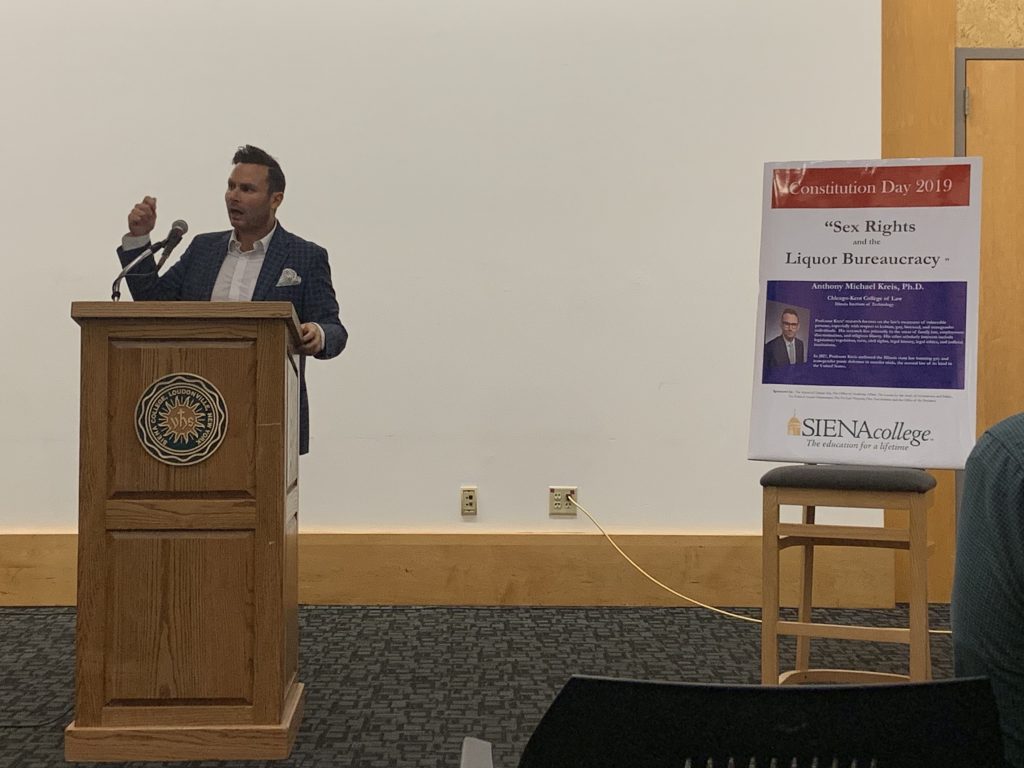
On Monday, September 23rd, the Siena community came out to attend “Constitution Day 2019: Sex Rights and the Liquor of Bureaucracy” featuring guest lecturer, Dr. Anthony Michael Kreis. A national holiday, Constitution Day exists to commemorate the signing of the Constitution in September, 1787. Here on campus, Constitution Day serves as an annual opportunity to discuss a relevant concern regarding constitutional law. This year’s Constitution Day took on a question that has been recently creating turmoil in American legislation: who really is protected under Title VII of the Civil Rights Act of 1964? 

The discussion was opened by Professor of Political Science, Dr. Leonard Cutler. Dr. Cutler elaborated on the relevance of this year’s theme, “A few weeks ago, the Trump administration took it’s staunchest position to date in legalizing anti-gay discrimination..” he continued  “..when it asked the supreme court of the United States to declare that Title VII of the Civil Rights Act permits private companies to fire workers based on their sexual orientation.” 

Title VII of the Civil Rights Act outlaws discrimination based on race, color, religion, sex, or national origin. As explained by Dr. Cutler, the current presidential administration has taken on the stance that members of the LGBTQ community are not protected under Title VII in regards to private employers discriminatory practices. Following Dr. Cutler was Professor of Political Science, Dr. Jack Collens. Dr. Kreis and Dr. Collens attended graduate school together at the University of Georgia and after sharing his accolades with the crowd, it was time for Dr. Collens to invite Dr. Kreis to the stage. 

Dr. Anthony Michael Kreis currently teaches legal writing at Chicago-Kent College of Law. He authored the Illinois state law banning gay and transgender panic defenses in murder trials in 2017, which is the second of its kind in the U.S. Dr. Kreis opened by discussing how the accidental discovery of gay and lesbian bars during the Prohibition era sparked an ongoing dispute of the LGBTQ, immigrant, and working class communities versus American law-makers and private groups that wanted to maintain the social norms of pre-Industrial Revolution times. 

“If you had too many feminine men in your bar, they deemed it a place of disorderly conduct. And they put pressure on wholesalers to deny those establishments of liquor” Kreis stated. “In the 1940’s, 50’s, and 60’s the state said ‘If we see too many feminine men in a bar, we’re assuming it’s a gay bar and we’re shutting it down” he said about the determination if establishments could remain open post-prohibition. Basically, the battle between the LGBTQ community and American law-makers has been occurring for over a century.

At this point in the lecture, the question still remained, what does all of this mean for today’s concerns surrounding a new interpretation of Title VII? “The idea here is that you cannot discriminate against someone because of their sexual orientation without also discriminating against them because of their sex.” He elaborated that the stereotypes surrounding gender roles used by employers to justify discriminatory practices against LGTBQ employees directly plays into sex discrimination. 

Dr. Kreis closed out his discussion by stating “Title VII is ultimately supposed to reflect our constitutional values and the law has been shaped by an understanding that sex stereotypes are dangerous..” Following the lecture, Dr. Kreis opened the floor for Q&A and soon after, Constitution Day 2019 came to an end. After all was said and done, attendees walked away from the event with a greater understanding on a topic that Dr. Kreis referred to as, currently, “the greatest civil rights case of our time.”

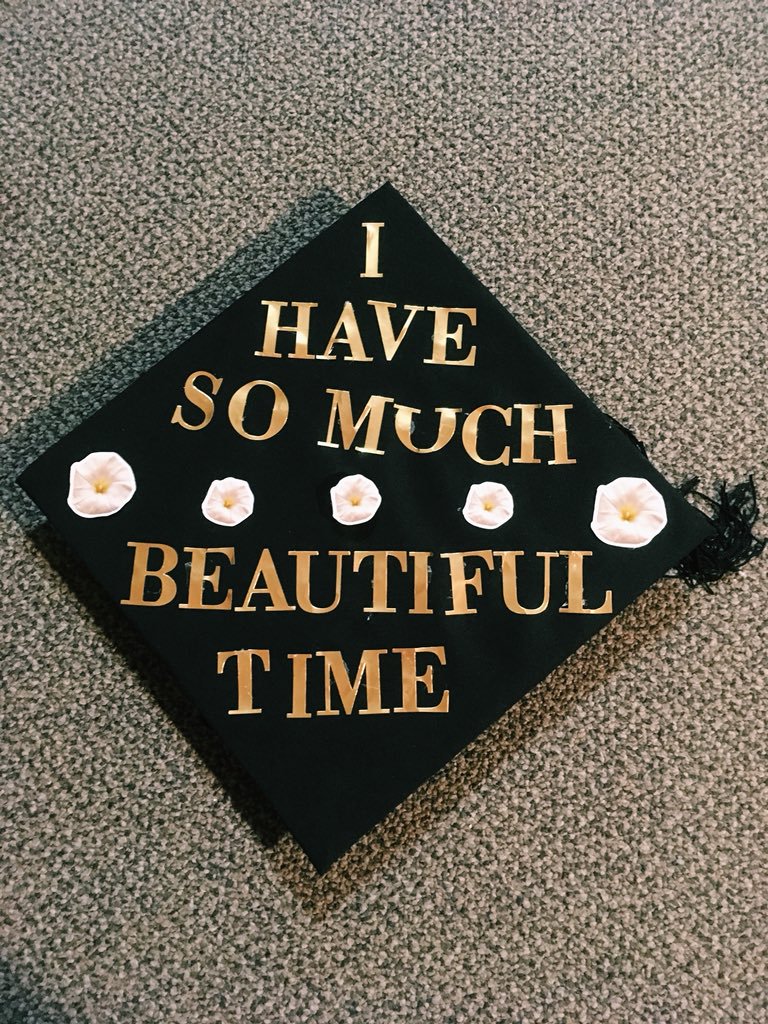
Welcome Home, Class of 2023!

Around this time four years ago, I remained undecided about where I wanted to go to college. I had applied to multiple schools but still felt uncertain about what I wanted to do with my undergraduate education, how far I would want to live away from home, and what type of college felt “right” for me. The universal “College Decision Day,” May 1st, kept creeping closer, and I felt the pressure of the decision weighing down on me.

My parents could tell I was struggling with the choice, so one day after school, we drove out to Albany to drive through some of the colleges in the area to help me visualize what living there would be like. We visited UAlbany and the College of St. Rose, but neither felt right; it wasn’t even a feeling I could put my finger on about why they were wrong. It wasn’t until we pulled onto Siena’s campus that I found somewhere I thought could feel like home. As we got out of the car and walked around campus, it became a place where I could visualize myself spending four years, making friends, growing, and I sent in my deposit to Siena shortly after returning home from that trip.

Now, four years later, I’m shopping for a graduation dress, studying for my last final exams, and preparing to leave behind the place that I have come to call “home.” I’m getting ready to say all those hard goodbyes  to roommates, to friends I met during freshman orientation, to the faculty who have pushed me to achieve my academic best.  I used to think it sounded cliche when other people would refer to their college as a “home”; it took me time to see it that way, but now that I think of Siena as my home away from home, it makes it even harder to leave. I’m excited to embrace the next chapter of my life with open arms, but I will miss Siena and the meaningful relationships I have made here.

The best piece of advice I can give any incoming freshmen is to embrace every aspect of the college experience. I remember feeling everything in-between scared and excited when I showed up for move-in day back in 2015. Sometimes college won’t feel fun – it’s a lot of hard work and sometimes you’ll fail test or sleep through your alarm or miss an assignment. Sometimes you’ll get homesick; I got homesick even through my senior year. But these things happen; they’re parts of the college experience. With these not-so-positive experiences come great ones — you’ll meet other students that you quickly become friends with. You’ll get to celebrate at the end of the semester with SienaFest, enjoy sunny afternoons on the quad, and feel on top of the world when you ace the test you were sure you’d fail. You’ll foster great relationships with your professors and they will push you to your best. You’ll find a club that you love. And little by little, these small great moments will stack on top of each other until you start calling Siena “home” without even realizing it. 

As a graduating senior, I would like to extend the warmest of welcomes to the Class of 2023 — welcome home! Siena is lucky to have you, and I hope you enjoy every moment of your four years here.

Practicing Email Etiquette

In the age of social media, the lines between professional and informal, colloquial writing are blurred, which makes writing professional emails a worrisome topic for some students. With the semester winding down, you likely have some pressing, last-minute questions about a final exam, research paper, or project, requiring you to send an email to your professor. At this point in the year, you might have a great relationship with your professor from engaging with them in class or speaking with them during office hours. On the other hand, you might feel like you haven’t fostered a good relationship with them over the course of the semester. I never really sent emails to my teachers in high school, so I was largely unfamiliar with how to write formal emails when I came to college. Whatever the case, it’s important to know how to best represent yourself via emails not only in an academic setting but in the professional world.

1. Pay attention to grammar, punctuation, and capitalization. This may seem like an obvious one, but adhering to the conventions of standard English is important. You can even install a free service like Grammarly, which proofreads your emails for you and even makes suggestions for improvement. Proofreading your own emails can also help you catch a lot of these mistakes, so make sure you look it over before pressing “send.”

2. Include a salutation and signature. While emailing, be sure to include a greeting at the top of the email – “Hi [insert name here],” “Good morning [insert name here].” This is a friendly way to begin your email and also establishes that you view your relationship with your professor as a respectable, professional one. Make sure you spell your professor’s name correctly. At the end, include a signature or sign-off – “Best, [name],” “Sincerely, [name],” etc.

3. Make the subject line clear and informativeInstead of emailing your professor something vague (“help!”), make your subject line clear. If you have a question about the final exam, something like “Final Exam Question” will suffice. Including an efficient subject line will help your professor answer your question.

4. Keep your email informative. Don’t use your email as the chance to rant. Professors do not want to read paragraphs on paragraphs of how you’re struggling with your semester, failing all your classes, or just broke up with your significant other. Your email should not only be professional but also relevant to the concern you need to address – choose your words wisely.

5. Determine if your question would be better addressed during office hours. Professors have office hours for a reason. If your question concerns a personal problem or would require a lengthy response, it might be best to address it during office hours instead of over email. I can’t speak for all professors, but some may be more likely to help you if you make the effort to visit them during office hours and talk to them face-to-face.

6. Ask yourself – is this something I can look up on my own? This is arguably the most important tip on the list. As a college student, you should be resourceful, and your professor will often provide you with the resources you need to succeed – including the syllabus. Your syllabus should have information on test/assignment dates, a breakdown of the grading scale, and professor’s office hours. Be sure to check these resources before reaching out to your professor, as your question might be one you can easily answer on your own.

Crafting professional emails is an important skill that is relevant to both your academic and professional career, so be sure to learn patterns of proper email etiquette.

39 Days and Counting

Remember when we were graduating high school and we were bombarded with the dreaded question:  “So, what do you plan to do when you graduate?” It felt like everyone asked this same question – your guidance counselor, the uncle you see twice a year for holidays, the cashier at the grocery store – and they only asked out of interest, but it never seemed to end.

And now it’s almost here; graduation day is only 39 days away. So here comes the question again, only this time it feels harder to answer. There’s nothing wrong with someone being interested in your future, but it can feel frustrating to not have a certain response, especially when there are so many choices to make following college graduation.

Post-grad opportunities are endless. I know friends who are gearing up to move across the world to China, or who plan to travel and live off their savings for a year. I also know friends who just put in their deposits for law or graduate school. I know peers who already have a job lined up for the indefinite future. And I know people who aren’t sure, who hope to take a stab at the job market, work on paying off their student loans, just see what life after college is like. 

There is no wrong choice to make for your future upon graduating. Right now, it might seem like everyone has their plans together, that they know exactly what they’re doing – but they don’t. It’s okay to be uncertain and even feel scared about what will happen after you walk across that stage, move your tassel to the left, and become a Siena University alumni.

It’s okay not to have a definite answer to, “So, what do you plan to do when you graduate?” These choices don’t always happen overnight, and it’s important to remember, as we edge closer to graduation day, to enjoy the time we have left at Siena.

Siena Holds 6th Annual Hip-Hop Week

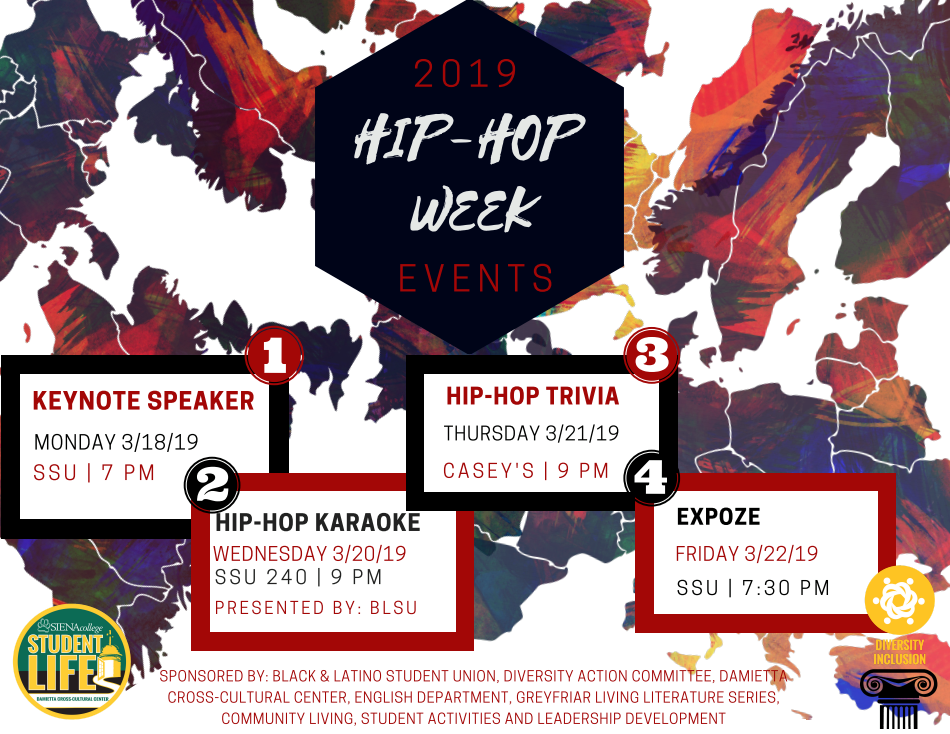
From Monday March 18th to Friday March 22nd, 2019, Siena celebrated its sixth annual Hip-Hop Week, a week-long celebration of the social and cultural impacts of the music genre. The week is coordinated by the Damietta Cross-Cultural Center and Dr. Todd Snyder, associate professor of English, as well as the professor of a popular, upper-level writing class, “Rhetoric(s) of Hip-Hop.”

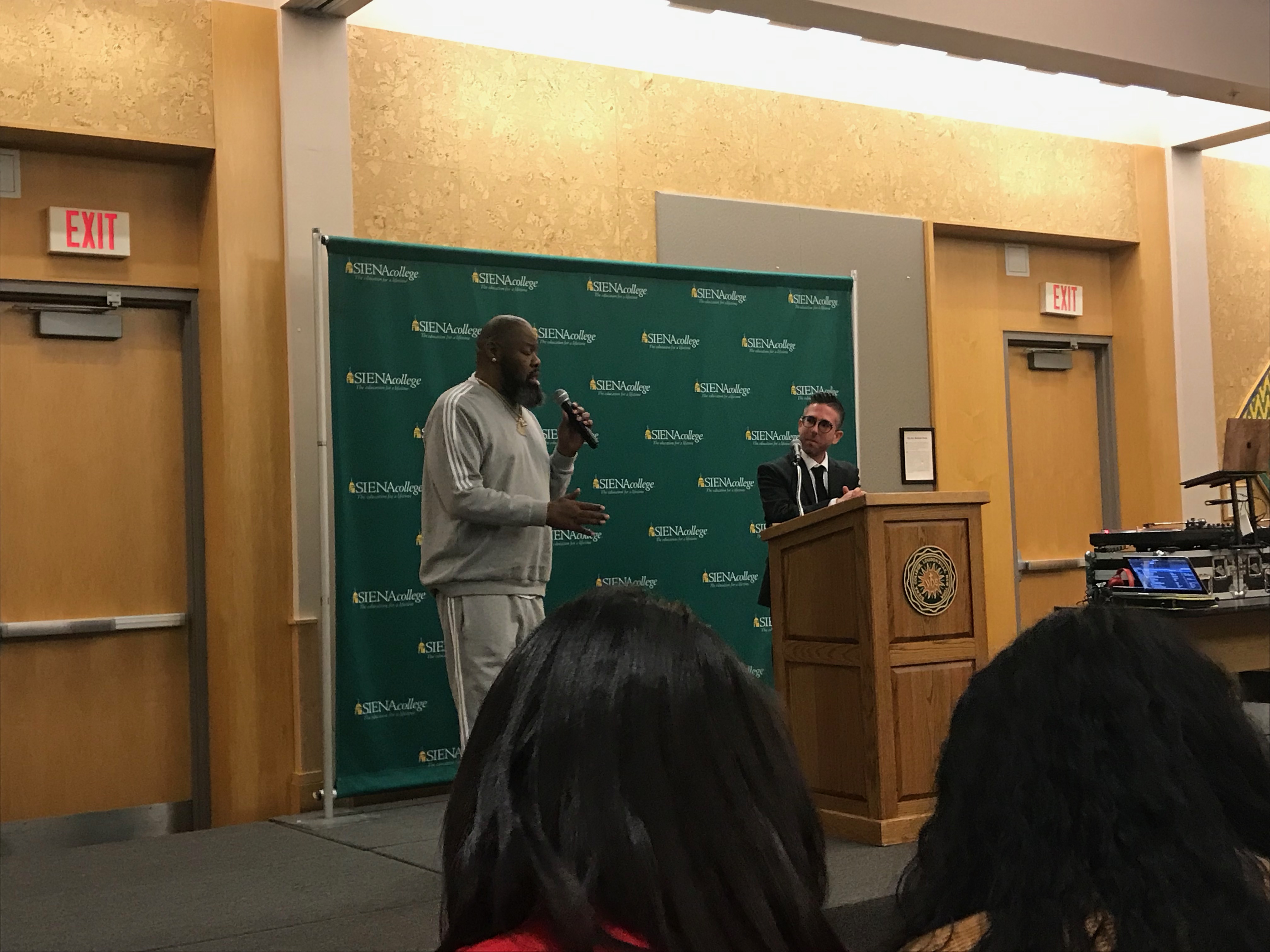
Hip-Hop Week kicked off on Monday with a visit from hip-hop pioneer, Biz Markie. Born Marcel Theo Hall but better known by his stage name, Markie has been working in the music industry for over thirty years and is well-known for his unique musical style, beatboxing skills, and DJ performances, as well as a brief dabbling in an acting career. When he took the stage in the Sarazen Student Union on Monday, he performed his hit single from 1989, “Just a Friend” and the audience sang loudly along to the familiar song. 

In Dr. Snyder’s introduction, he proudly shared that Siena is “the only college in the United States of America that has an annual Hip-Hop Week.” The event has become a staple not only in the Siena community but in the larger Capital Region, as Markie’s visit drew an impressive crowd of students, faculty, and community members. Dr. Snyder then lead a Q&A with Markie, asking about his initial interests in the hip-hop genre, as well as some of his personal influences with music. Markie was an engaging speaker, and his entertainer personality shown through in his responses; he would beatbox throughout his answers and crack jokes with the audience.

The events of the week also featured Hip-Hop Karaoke on Wednesday night, where students could win prizes by performing and dressing as their favorite artists, as well as a Hip-Hop Trivia Night on Thursday. This Friday March 22nd, Hip-Hop Week will conclude with “Expozé: Evolution of Hip-Hop” at 7:30pm, presented by Siena University’s Black & Latino Student Union. The event is a talent showcase that will feature a number of performances by Siena’s dance clubs. Tickets cost $3 for Siena students & faculty and $5 for outside guests, and all proceeds will be donated to the Coalition for Homeless Youth. 

Hip-Hop Week is sponsored by the Black & Latino Student Union, the Diversity Action Committee, Damietta-Cross Cultural Center, the English Department, Greyfriar Living Literature Series, Community Living, and Student Activities & Leadership Development.

If you’re interested in reading more about Markie’s visit, I covered his performance and keynote lecture in the 3/29 issue of The Promethean, which can be read here.

Greyfriar Author Speaks with English Class

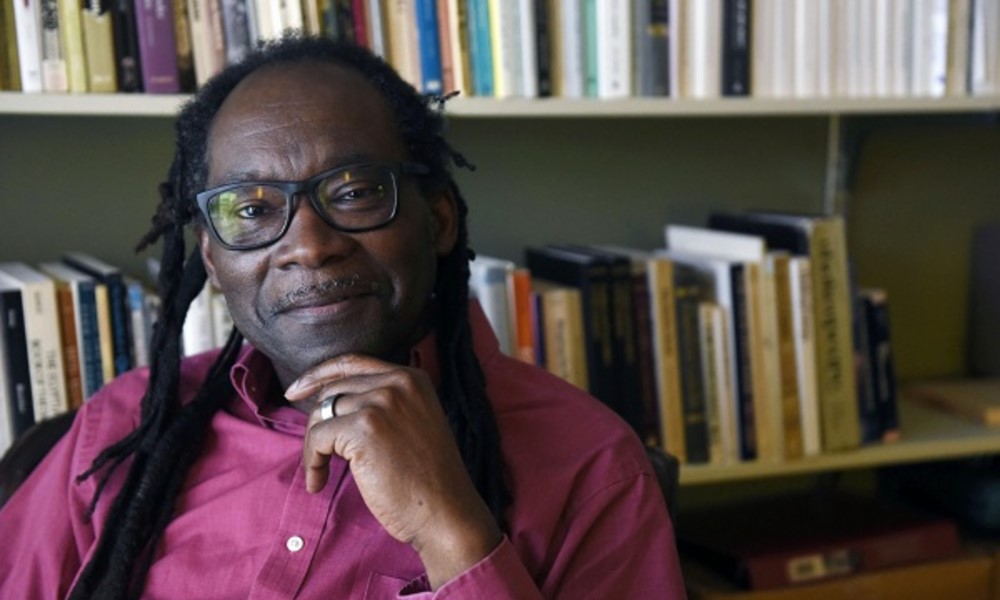
Each year, the English Department hosts the Greyfriar Living Literature Series in which they invite a distinguished literary writer to hold a workshop, discuss writing, and read from their work. This year’s Greyfriar author was Anand Prahlad, a published poet, memoirist, and professor. Prahlad visited my African American Literature class on Tuesday March 5th in the afternoon before his lecture and shared some of his insights on writing with our class. 

As part of our assignment for the day, my professor, Dr. Wilhite, assigned selected passages from Prahlad’s 2017 memoir, The Secret Life of a Black Aspie. His memoir discusses his experience with autism spectrum disorder and describes the way he sees the world. Prahlad kicks off his memoir with a bold statement: “Before I start telling you about my life, though, I should share with you a secret: I don’t remember most of it.” He admitted to our class that it was a line he wasn’t sure if he should keep in the memoir, but decide that there is an important, distinguished relationship between memory and life writing. “Everyone remembers differently,” Prahlad said.

Dr. Wilhite started off the class by having us read one of Prahlad’s poems, “Grind,” from his collection of poetry, As Good As Mango. The poem, written with extensive enjambment and impressionism, narrates an observer watching young black boys skateboarding in Harlem. Students discussed some of their observations from the poem, including Prahlad’s use of bright and positive imagery with darkness. Prahlad listened to student’s comments, then explained his own intentions with the poem, specifically how it was meant to capture a sense of percussive choreography. It was a great opportunity to hear an author speak about his own work. 

The class then transitioned into talking about the selected passages from Prahlad’s memoir. Students were able to ask Prahlad questions, and many of their inquiries centered around his writing style as someone diagnosed with autism spectrum disorder. “My relationship to memory is kind of rooted in sensory experiences,” he explained. Prahlad shared an anecdote about a time he was asked to describe the autistic experience in order to best understand how to work with someone with autism. “Imagine everything is alive,” he said. “Everything is an aura. Everything is vibrating.”

Hearing Prahlad speak about his memoir and poetry was a valuable opportunity as an aspiring writer and an English major. I was unfortunately unable to attend his reading and Q&A due to a class conflict, but I was fortunate to have the chance to hear him discuss his own work. If you’re interested in learning more about Prahlad and his publications, you can check out his website at https://prahladauthor.com.