Recrafting Your Job to Fulfill Your Calling: The Unlimited Opportunities of the Liberal Arts

Jerry DeFrancisco 2 23 15

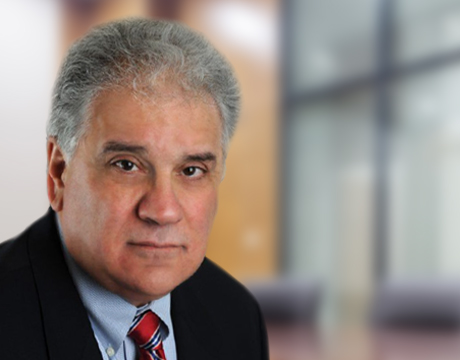
Gerald “Jerry” DeFrancisco ’68 (HIST) 

Will my undergraduate studies help me find professional and personal fulfillment?

The question that every student asks as he or she embarks on the journey through higher education. Gerald DeFrancisco’68 (HIST), suggests that it is important not only what a student learns in the liberal arts but also how a he or she learns that leads to professional and personal success.

As a History major, DeFrancisco was always asked why he enjoyed studying history since it was all facts and memorization. But DeFrancisco didn’t see it like that. He saw history as a guide on how to live in the future; one must understand the past to grow. It is a cheat sheet of facts, dates, and personal experiences you can use to understand the present and the future. Reading and hearing about current events is simple, but it is a liberal arts student who processes these events and analysis current problems with an understanding of the history involved.  This gives an analysis of a problem and a potential solution that has perspective, insight and context.

That is exactly what a liberal arts education is about. You are taught how to learn and to attack problems from multiple perspectives and frameworks. As DeFrancisco explained a liberal arts student has the skill and interest to learn continuously.

Additionally, DeFrancisco told those in attendance that these crucial liberal arts outcomes are exackly what employers are looking for in their employees:

  1. Effective communication skills both orally and verbally
  2. Team work
  3. Ethical judgment & decision making
  4. Analytical skills
  5. Application of knowledge and skills in real world settings

He highlighted that none of these skills are technical. They are all social skills that liberal arts students learn and apply throughout all of their studies. Liberal Arts students compliment business, science, and technical majors in the business world.

DeFrancisco is currently the ACE Civic Leader in Residence and works with the NEXT Fellows Program.  NEXT Fellows partner with local non-profit organizations as business consultants.  He encourages liberal arts students to join NEXT.  He believes that the current liberal arts students in the program compliment the experience course skills of the business students and offer the program partners a better consulting relationship.

DeFrancisco concluded with an analysis of how liberal arts majors handle themselves in a business environment. Superior communication skills and sensitivity to the environment and people around them, liberal arts students have the qualities every employer is looking for in their prospective employees. Have faith in your skills and “be loud and proud,” as DeFrancisco says! Keep an open mind and your liberal arts education will have your back.
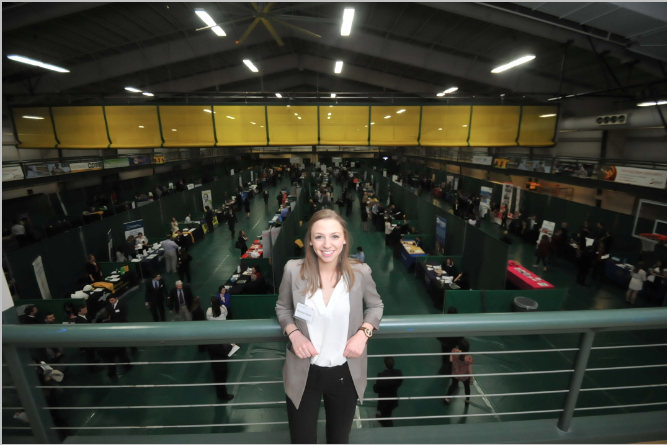
 

Adventures at the 2015 Career, Internship, Grad School Fair

Margie Baxter at the 2015 Career Fair

Margie Baxter at the 2015 Career Fair

Walking into the MAAC Gymnasium with my nude flats and straight leg dress pants I began to panic. Looking forward I could see the three rows of back-to-back businesses, corporations, news stations, and graduate schools. As I clipped on my nametag I took a deep breath and began to walk forward into the great abyss of the career fair.

Resumes in hand I approached a familiar company by whom I am already employed as a hostess at one of their local bistros. I began to converse with one of the representatives of Mazzone Hospitality. Unsure of what it was exactly that I wanted to find out or wanted him to know about me, I stood there in front of him, my mind running with things to say.

I remembered how at a networking event I had once attended I learned how to articulate a so-called “elevator speech.” A quick speech introducing yourself, your major, your estimated year of graduation, any experiences you have had, let it be an internship or volunteer work in your field, and perhaps what you plan to do with your degree in a non-begging-them-to-give-you-a-job way.

Already having known the company and understanding their beliefs and expectations, I had more to talk about with the representatives than I had realized. I was lucky to have this connection, but it would help next year to research some of the companies/universities before attending the fair to show my interest and have questions lined up.

As I walked around talking to company after company I became more and more comfortable. As a liberal arts student I felt well prepared for the fair. While it is easily assumed that the fair is much more fitting for business students, many companies are looking for students who have learned how to think creatively and critically at the same time, students who can properly articulate themselves and have effective communication skills; all of which a liberal arts student is proficient in. I found that a lot of the positions that companies talked about were managerial or marketing, but a liberal arts student is just as much suited for that position as a business student. 

I walked out of the career fair learning three main things:

  1. HAVE YOUR RESUME PREPARED! Go to the career center events to get your resume critiqued. Drop your resume off at the career center to have them edit it. Make sure it is flawless and really represents who you are and your accomplishments. If you pass out your resume to companies you showed interest in, it could be used for future reference!
  2. RESEARCH BEFORE! Look into the companies. Find out what companies are coming to the fair, look into a handful of them, find out what their company stands for and if you are interested in it, think of some beneficial questions you could ask them. (Easiest question: What is your favorite part about working for this company?)
  3. GO BEFORE SENIOR YEAR! Even if you are a freshman or sophomore still figuring out what to do with your life, go to the career fair for the experience. Going one time will give you more confidence for the next year. I promise you will learn something each time you go. So go! You never know what you’ll find. Then, when senior year comes around and you’re looking for a job/internship for after college, you will be prepared and already know what to expect.

Resume the Right Way!

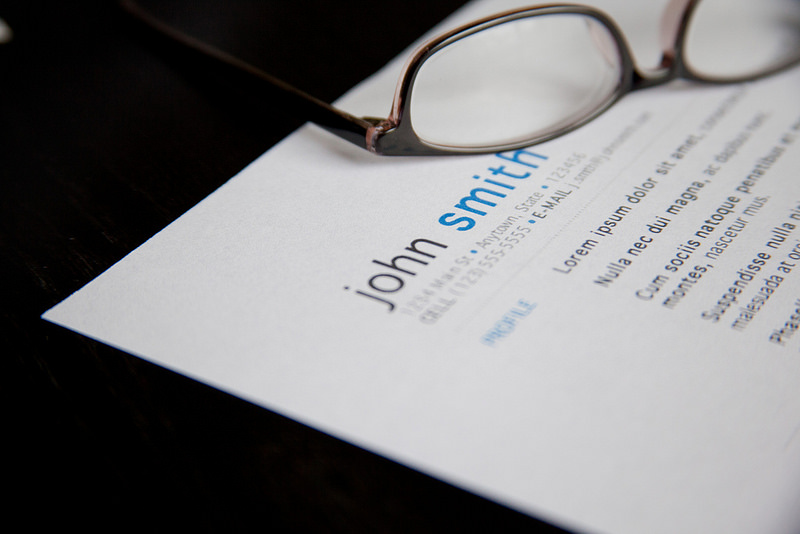
Flazingo Photos Resume - Glasses  Job Resume with Glasses

Flazingo Photos
Resume – Glasses
Job Resume with Glasses

There are many key aspects to having the perfect resume. At the Career Center’s Resume Critique night, a real employer, Lauren A. Cataldo, critiqued my resume. I learned the seven main aspects an employer looks at when reading a resume.

Format

Always keep your resume organized. Break it up into sections of education, experience, skills, and extra curricular activities / interests. It is also very important to separate those categories with a long bold horizontal line for easier reading and navigation.

Appearance

Consistency is a huge must in resumes. The font and spacing need to be the same throughout the entire page. Your short explanations of the work you’ve done or the education you’ve received should be listed in bullet points or dashes. There should be a flow to the overall appearance of the resume. You also will want to have a heading that stands out next to others.

Name and Contact

All of the information needs to be relevant and in many situations, the employer will appreciate more if the information was geared towards the specific job you are applying for. No nicknames allowed! Only your full name is appropriate on this document. You should have a real mailing address and a professional e-mail address. Finally, leave a cell phone number only, no need for a home number or multiple numbers.

Education

This category should be the first or second section after your heading. In order starting from the present, list Siena as your primary education entry including your degree program and graduation year. Follow with your high school and years of enrollment.

Experience

Your experience section should be in order of most recent assignment. It is important to list not only the name but the location of the organization as well. This section is a big conversation starter if you have something in common with the employer reading your resume. Dates of experience are also very important because the employer wants to see how long you last in certain situations. Underneath the name of the organization should be bulleted statements starting with action verbs and describing the student experience. These statements should be brief and should not be repetitive.

Additional Relevant Section

You should include your skills such as computer programs and social medias and interpersonal skills. More important aspects are coursework, foreign language, community service, extracurricular activities/ leadership, honors/awards, and athletics. All of which should be detailed.

Grammar

This final category is a lot more important than you may think. Correct spelling, capitalization, and verb tense consistency show your attention to detail and that took the time to read over your resume more than once.

If you have all of these aspects of your resume complete, then you are on the right track to impressing a future employer! Best of luck!

Student Internship Panel

Will Marlow Stage Fright [EXPLORE]

Will Marlow
Stage Fright [EXPLORE]

This semester’s Student Internship Panel was nothing less than exciting and informative. Last semester I was in the crowd listening and taking notes as an internship-noob trying to take in the most information as possible. This semester, I sat on the other side of the table as one of the panelist answering questions from the presentation leaders and the students.

Allison Schultz, the Assistant Dean of Liberal Arts, Ashley Dwyer, the Assistant Director for Employer Relations, and Melissa Potocki the head of Hennepin Hall lead the discussion in the Saracen Student Union. Behind the long table in the front of the room sat myself and four other Siena Students between junior and senior year who currently, or who have in the past, held an internship or shadowed an impactful role model.

This time around I was able to be the one to answer the questions of how to get an internship, the benefits of having an internship, how to make the most of your internship and information about networking and maintaining relations.

This panel was a reality of how much I have actually learned since being an intern. The skills I have gained in this internship are far more than I had bargained for. Signing up for an internship titled “Internship in English,” I had not expected all of the technologic work I would be doing. Also, I would have never expected that I would be doing so much public speaking!

Internships are valuable for many reasons, one reasons being you have the ability to share your experiences with others. Next semester I would highly recommend signing up to be a panelist at the Student Internship Panel of Fall 2015! 

Study Abroad

Merrimack College Study Abroad Photo Contest Fall 2011 - 3rd place

Merrimack College
Study Abroad Photo Contest Fall 2011 – 3rd place

Have you ever thought about what it would be like to work over seas? Have you ever wanted to explore a culture so different from the one you were raised in? Study abroad is just that. Study abroad immerses the student in the challenges of taking classes and sometimes interning over seas with other students, in the same age range, with similar interests. 

In an interview with Greg Jabaut, the associate director of International Studies, I found out some important things one should think about when pondering whether or not to study abroad.

Q: How would studying abroad deepen the learning goals of a liberal arts student?

A: Through exposure to new ideas and attitudes, study abroad students develop more global and creative ways of approaching and then solving problems, both in the classroom and in their future workplace. In order to survive and thrive abroad, and to fully understand their host culture, students must develop effective communication skills, often in a new language.

Q: What are some common fears students who think of studying abroad face and what advice would you give them to over come those fears?

A: I always tell students that being nervous about study abroad is completely normal, but that as long as they still feel even a little bit excited about their future study abroad experience, they will be just fine. Students make fast, long-lasting friendships abroad, not only with locals, but also with other American students from all over the country. Most Siena students don’t just survive study abroad; they thrive, calling it the highlight of their undergraduate experience.

Q: How would a student who studies abroad differ (pros and cons) in comparison to one who has not studied abroad?

A: In general, students that study abroad return home with a better understanding of who they are and where they are going in life. They also return more adventurous, self-reliant, and tolerant of the unfamiliar. I know I’m biased, but I’m not sure there are any cons to studying abroad!

Studying abroad has so many personal benefits and also academic benefits. It could be the one line on your resume that made you stick out to a future employer, or your gained skills in conversational language from where ever you travel might be useful in an interview. Even small things like that will only grow from your experiences abroad.

On the Siena.edu website, under Academics, under High Impact Practices, there is the Study Abroad option. (Or click the mage below) Once you are on the study abroad page, there are three options.

Screen Shot 2015-02-12 at 12.19.17 PM

Click the one that fits you and begin exploring!!


The English Society

Thomas Abbs Paperback Writer

Thomas Abbs
Paperback Writer

Joining the club focused on your major is beneficial in many ways. I am an English major, therefore, I am part of the English Society.

On the eve of the blizzard, not many people showed up for the meeting. Even so, it was a great opportunity to meet some of the other members in a much more intimate setting. The President, Erin DeGregorio, and VP, Matthew Roberts, did a good job of setting up a fun semester.

People might think the English Society is a fancy title for a book club or a place where the members only talk about Shakespeare but in reality the English Society is much more up to date with its discussions.

In future meetings, as the Matthew Roberts promised, everyone will bring a piece of literature: poetry, a short story, anything. Then everyone will read aloud their piece. It could be a good confidence booster, a way to get engaged in the community and hear what other people have to bring to the table.

Another aspect, which I did not know about, was the English Society gets their very own column in the Promethean. And that column is open to any member who wants to write for it.

Attending this meeting lead to another realization that Siena offers so much. Take advantage of everything, even if it’s a small English Society meeting where only 5 people show up. I met new people who enjoy the same things I enjoy and I now look forward to meeting again next week. 


Pendragon: Siena’s Student Run Literary Magazine

Structo issue five spread by Euan

Pendragon is Siena’s very own Literary Magazine; in which students can submit any form of a creative medium (short stories, poems, artwork, photographs, etc.) and the Editorial Board reviews it anonymously and then selects the best works to be publish in that issue. President, Miranda Nagell, gave me some insight on how careful their review process really is. She explained that the submissions are numbered as they come in with no name. Then the board members rate each individual submission on a scale of 1-5; five being the best thing they have ever read and one being the worst. The scores are then added up and depending on how many pieces they have room for in that addition, that number of pieces with the highest sum of ratings are then published.

The anonymity of the critique minimizes the intimidation factor and promises an unbiased eye. Obviously, no one wants his or her work critiqued but in the real world you and your work are nothing but critiqued so submitting to Pendragon is a great trial run.

Two semesters ago I had an extra credit opportunity to submit a short story from one of my classes to Pendragon. Whether or not it was published was not the point. It was just to get awareness of Pendragon out there and to encourage the students to submit. To my surprise they published my short story.

When I graduate I don’t plan on being an author. Honestly, I don’t even write short fiction unless it is for a class. But the feeling of having a short story I wrote published in an academic literary magazine was a great feeling. I felt accomplished that my work was good enough to get published, even if it was only for a class.

I stress the importance of trying new things and getting your name out there. Even if your work does not get published, you still made the effort to submit it and you then have room for improvement.

With the publication you get two free copies of the journal, another line on your resume, and bragging rights.

The submission deadline for this year’s addition is February 21st, 2015.

Click here for the guidelines:  https://www.siena.edu/academics/schools-departments/departments/english/pendragon/pendragon-submission-guidelines/

Click here for more information about Pendragon:  http://www.siena.edu/academics/schools-departments/departments/english/pendragon/


Welcome Back!

Some Books by Ben O'Bryan

Some Books by Ben O’Bryan

Welcome Back!

After a pleasant but short winter break, we are back in action!

Just a few reminders:

  1. Don’t stop engaging with the Siena community… socially and academically. I know its cold and you don’t want to leave your dorms but going to events and lectures gives you an opportunity to meet new people and learn about different ideas and perspectives. You will develop skills you won’t get from just sitting in a classroom and you will hear stories that will inspire and motivate you. So go!
  2. Keep an open mind… don’t close yourself off from anything. The best experiences only come to those who are willing to experience it. As a Liberal Arts major you already understand the benefits of a broad , liberal approach to your studies so keep that unbiased mindset in all your endeavors.
  3. Finally, read the digest. It has really improved over the past couple years so take advantage of it! That is where you learn about events and lectures on campus and current Siena news. Take a minute each day before you scroll Twitter and Instagram to skim over the digest.

Don’t forget to follow us on Twitter: @Siena_Lib_Arts and Facebook: Siena University School of Liberal Arts

Can Liberal Arts Fit in the Business World?

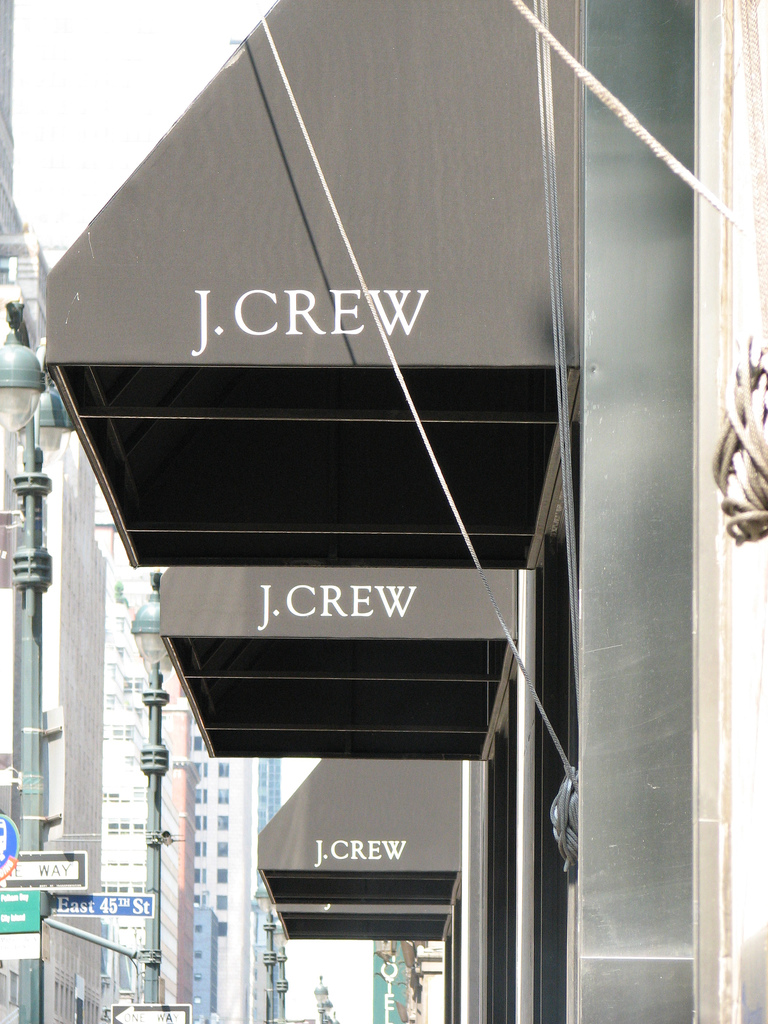
By Michael Daddino J. Crew Awnings

By Michael Daddino
J. Crew Awnings

On November 11th, 2014, James Scully, the J. Crew C.O.O Rep, returned to Siena to discuss his journey with his liberal arts degree and how we can make the most of ours. Scully graduated in ’87 with a degree in English and was enrolled in the ROTC program as well.

At such a preppy school, many of us are very familiar with J. Crew and its female line counterpart, Madewell.  As explained by Scully, there are 271 J. Crew, 131 J. Crew factory/outlets, and 76 Madewells. Since 2011 it has expanded internationally especially with the use of opening online stores. The interesting thing about J. Crew that I had not realized was the fact that you can only buy J. Crew brand clothing from J. Crew stores. There are no other stores that sell J. Crew apparel.

But what really caught my attention though, was the fact that he was an English major. I am an English major. When anyone asks me what I plan to do after graduation, never in a million years would I think to say, “Oh, I want to go into retail and become the Chief Operating Officer of a multichannel fashion company.” I usually just stick to “Well, teachings an option, maybe going into editing and publishing, I don’t really know yet…” The classic conversation stopper of an answer.

But Scully confessed he never wanted to be a teacher. He knew the broad education he would receive from the classical training here at Siena could take him anywhere. He was very passion that it is your “personal satisfaction and growth in your career that will allow you to do whatever you want.” A liberal arts degree opens more doors than it closes. He feels his education has made him proficient in long term things such as his communication skills, flexible thinking, and his abilities to problem solve. He raved how a liberal arts degree teaches competency. It gives the student the ability to realize that everything is constantly changing, especially in the realm of retail, and gives you the knowledge to be ready and able to learn new skills to overcome new obstacles.

In the Q&A, I raised my hand to ask if he regrets not taking any business classes while at Siena. He replied with absolutely not. While he does support the enrollment of business classes and econ classes, and finds them to be very valuable, he feels that his education in the liberal arts and his experience out in the field has taught him more than any business class could have.

Always keep in mind that a liberal arts degree can literally take you anywhere. Even though it is assumed that businesses will want to hire a business major, the skills you gain as a liberal arts major are skills that are lifelong and necessary for any job. Any person with a liberal arts degree has the skills to learn to be good at any job. Just remember, a Liberal Arts Degree lead James Scully, a Siena student just like you, to be the Chief Operating Officer of J. Crew and Madewell. Who knows what the future has in store for you with your Liberal Arts Degree!  

Liberal Arts Cares About the Environment Too

Norrie State Park-2 by Esther Lee

Norrie State Park-2 by Esther Lee

Caroline Bertholf, a Siena senior completed the Siena Summer Legal Fellows Program summer of 2013 and the summer of 2014. Here six schools were selected, and out of those six schools only two students per school were chosen to take part in the program (with the exception of the Albany Law Program that selects three students to fill a newly created Intellectual Properties internship position). A very selective program, the Legal Fellows Program is the only one of its kind in the country.

This past summer Caroline attended the Pace University Law School’s Environmental Litigation Clinic where she learned firsthand how the not-for-profit environmental law sphere operates. The clinic focused its attention on the issues regarding the water quality of the Hudson River Basin ranging from the Adirondacks to Long Island Sound.

This 8 week program tackled 5 cases with other law students against pollution and advocating for a much cleaner river. Caroline was expected to do extensive research and was given special permissions to use legal search engines at Pace. She was also very excited about her unlimited access to the Law Library for research at Pace. Along with her research, Caroline met with attorneys on a weekly basis to report on her research 3 to 4 times a week. At these meetings they would check on her development, talk about current news on the topic, new strategies and get assigned new projects. And on Tuesdays she would have meetings with clients and sometimes phone conferences to make sure everyone was on the same page moving forward.

She developed relationships with the people in the organization and used LinkedIn to find followers and keep professional relationships. With LinkedIn especially she is still involved in that community.

Naturally, she attributed her success to her liberal arts education. Caroline explained how she felt her education was so well rounded because of the School of Liberal Arts. She can draw now from all of her different courses, balancing between her business, economics, and finance courses with her liberal arts courses. Caroline felt Siena prepared her to act professionally due to her professors pushing her to do so. From the way classes are held and students are expected to withhold a standard at Siena she felt it was easy to acclimate to the professional environment at Pace University Law School’s Environmental Litigation Clinic. Similarly, She felt capable to think with an open mind and understand different perspectives because of the Franciscan values that Siena follows so religiously.